



My niece has no idea how long a minute is — so I built her a timer with no numbers
My niece is three. Stalling at the end of playtime one evening, she looked up and announced, very seriously, "only one more minute" — like a tiny lawyer who'd found a loophole.
I laughed, because she has no idea how long a minute is. So I called the bluff: "Hey Siri, set a timer for one minute."
We both watched it run down. And here's the thing — a minute of extra playtime is brutally short. It was gone before either of us was ready. She was stunned. Honestly, so was I.
That's the whole problem in one moment. "Five more minutes," "one more minute," "in a little while" — these are sounds we make at kids, not amounts they can feel. There's now, there's not-now, and a mystery in between. I wanted to give her a feeling for time. So I went looking for an app.
Every kids' timer makes the same mistake
I tried the good ones. A shrinking red disk, a green-to-red arc, a picture that slowly uncovers — they all assume the child can already read an abstraction: that less red means less time, that a half-revealed picture means halfway. That's the exact skill she doesn't have yet. My niece just saw a red shape getting smaller.
And nearly all of them are built for "4+," which in practice means six and up — with pause buttons a toddler finds in a second and ads between the cartoons. The two-to-five window, when the whole foundation for time gets laid, is empty.
So I read the actual research
I expected fuzzy parenting blogs. Instead there's a deep, decades-old literature on how children develop a sense of time. Four findings shaped everything.
A real sense of time arrives late. Piaget found a mature concept of time only consolidates around ages 7–11 (overview). Before that, kids confuse duration with speed and distance, and judge whatever's brighter or faster as lasting longer (Qu et al., 2021; Science News). A number in the corner is hopeless — the passage itself has to be the vivid thing.
Sequence comes before duration. Long before they grasp how long, kids understand what's next — "after my nap," "before dinner" (Illinois Early Learning). So you don't start with how long. You start with what's next.
Reading a clock is a late, stacked skill. Telling time leans on literacy, memory, arithmetic, and spatial reasoning, and only comes together at school age (British Psychological Society). Digits on a toddler's timer are a tool they won't own for years.
Make time visible — and warn before it ends. The most actionable finding, from special-education practice: a concrete visual plus an advance warning of the transition cuts meltdowns far more than a verbal "time's up," and works best inside a predictable routine (Dettmer et al., 2000). And children think in stories first: they can't process "three minutes left," but they completely understand "the bunny is almost home" (Bruner). The character carries the abstraction so the child doesn't have to.
What I built: Wobble
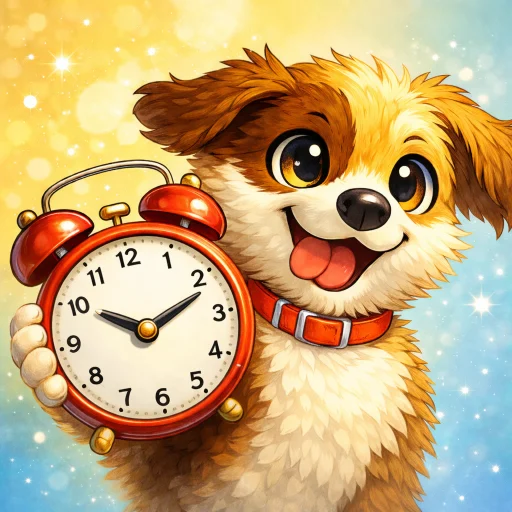
Not a timer app — a routine companion, with the timer as its engine. A timer starts, the child picks a friend, and the friend sets off across its own little world.
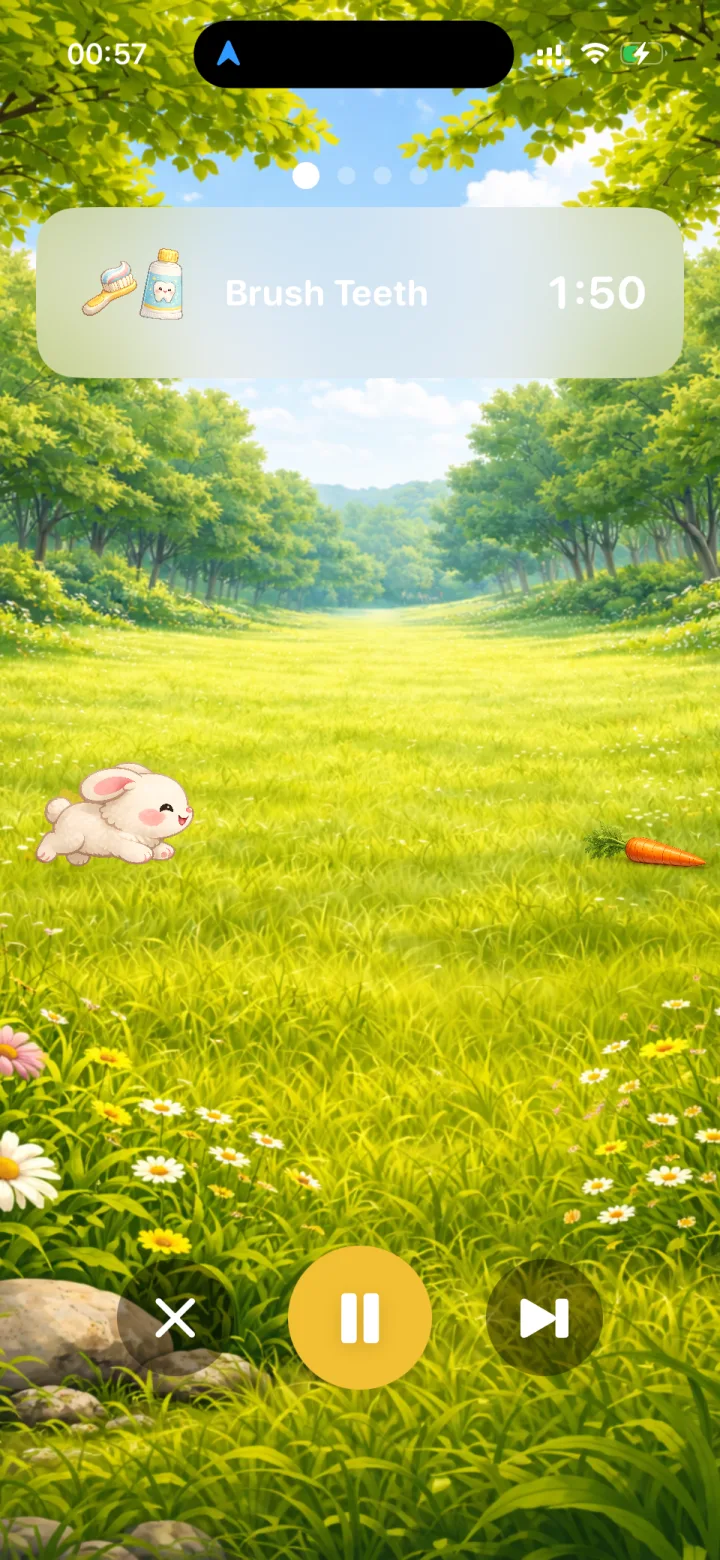
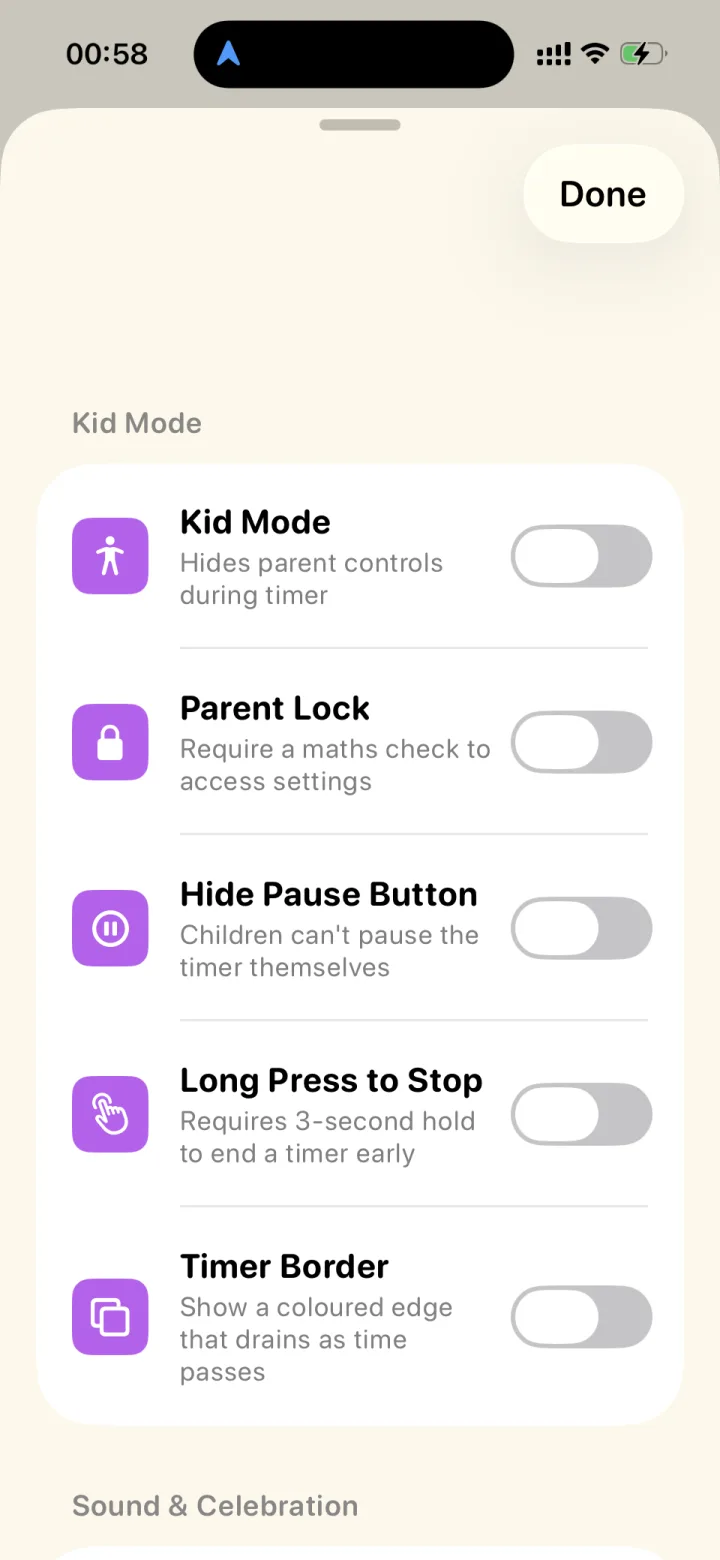
The child's eyes are on the character, not the clock. The time shrinks to a small pill at the top, the controls tuck away in Kid Mode, and what's left is the journey: a gentle flash and a cheer at the halfway point, another near the end — the advance warning the research is so clear about. When the friend arrives, the whole screen celebrates. Finishing is the reward, not the loss of something fun.
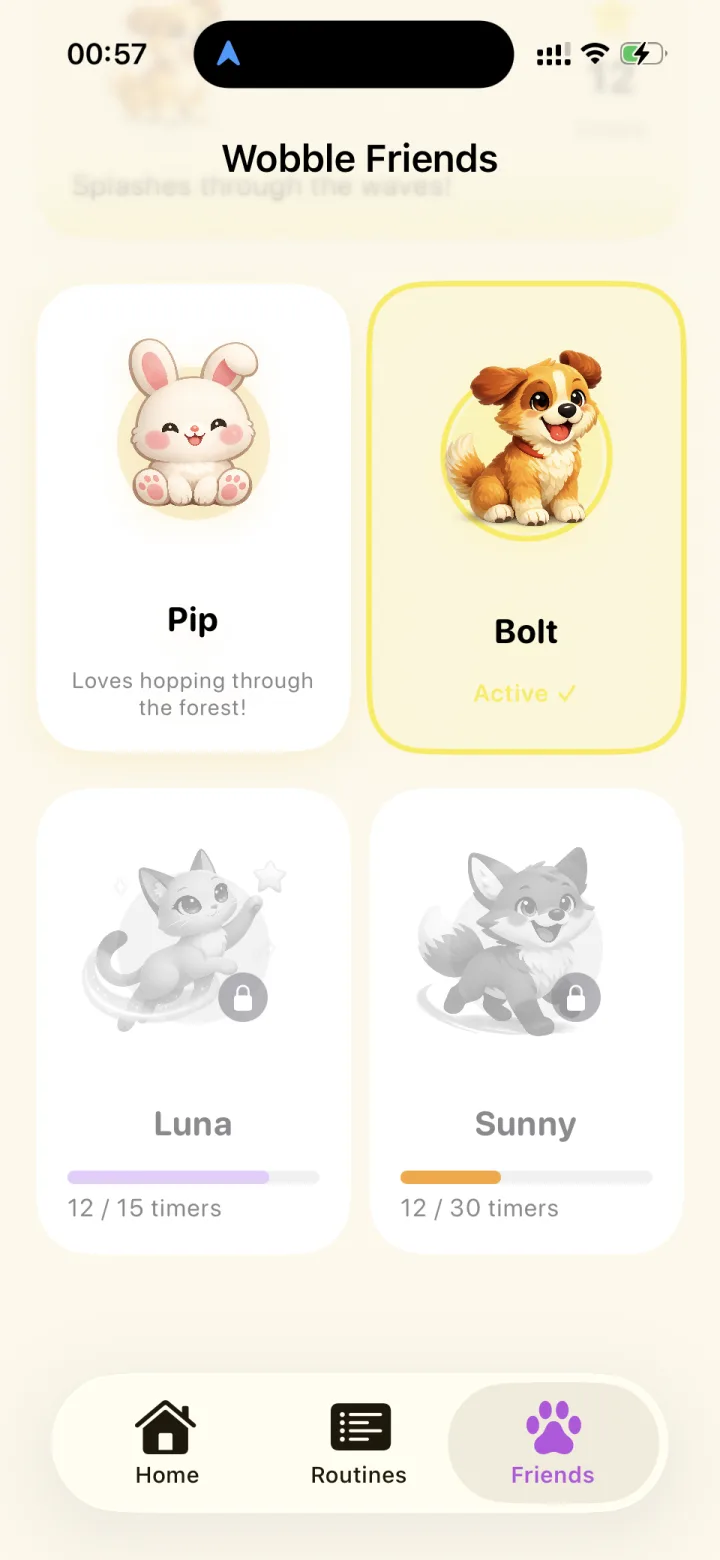
And every completed timer unlocks a new friend to travel with — which quietly turns "do the boring thing" into a collection to build over weeks.
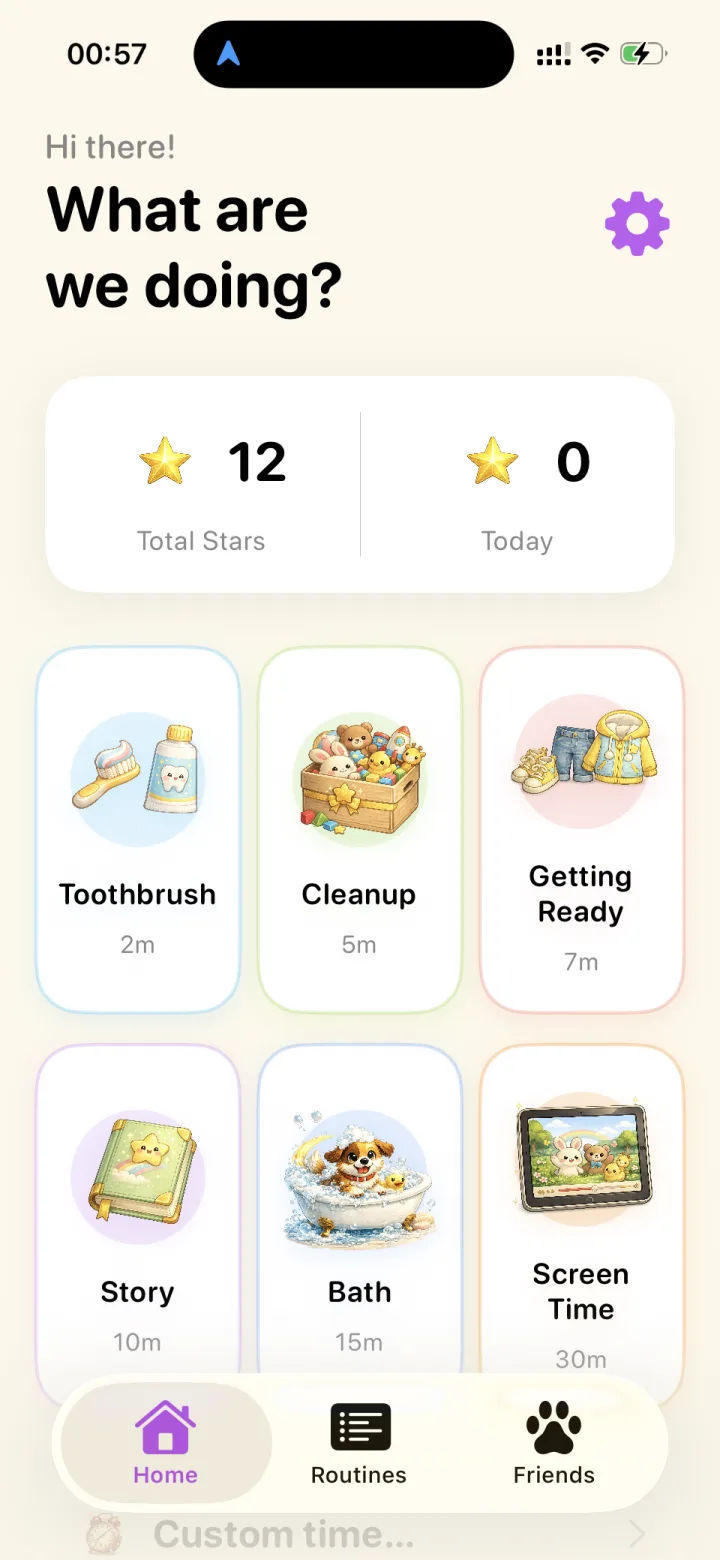
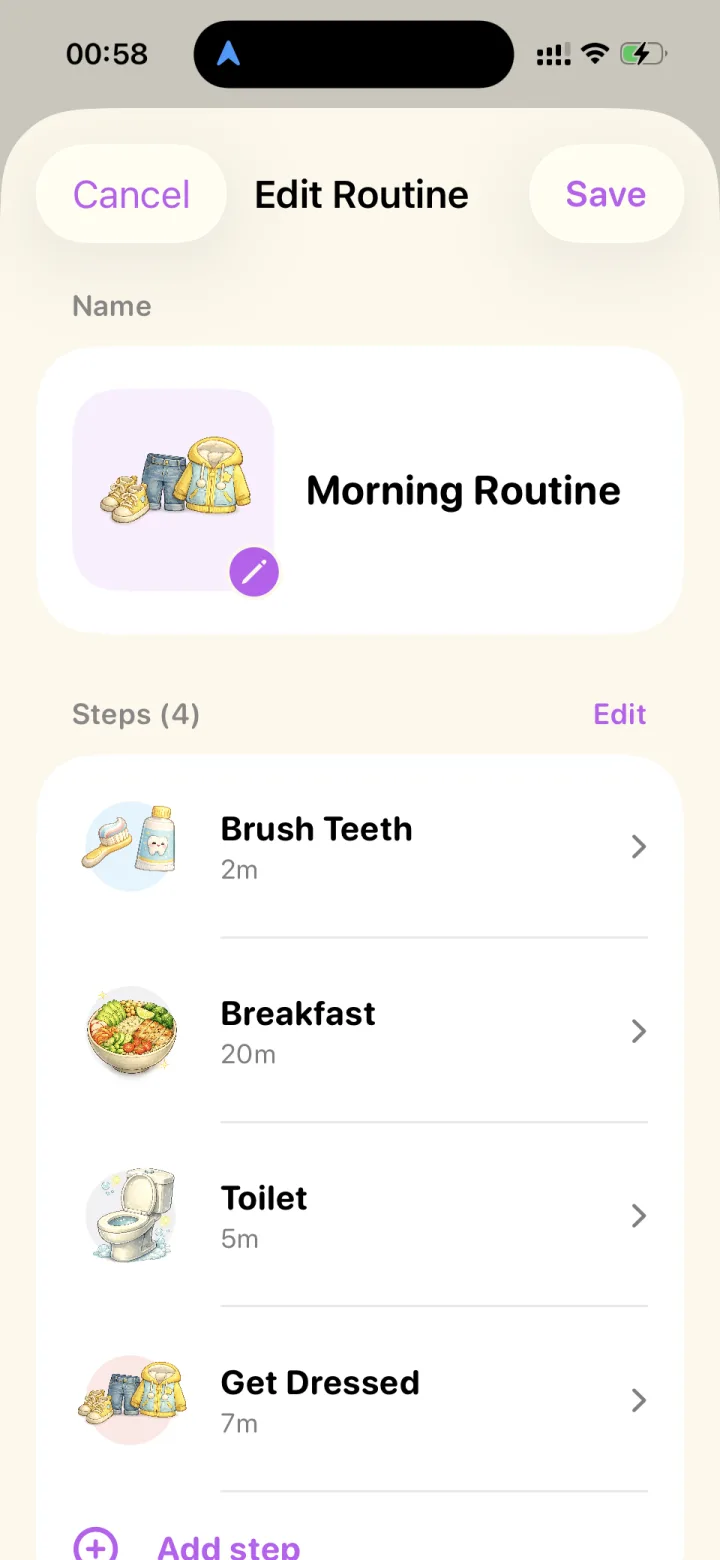
Parents chain timers into routines — Brush Teeth → Breakfast → Get Dressed — shown as a strip of pictures, so the child always sees what's next.
The grown-up settings sit behind a quick maths problem — easy for an adult, impossible for a toddler. One tap into Kid Mode hides the controls, the end celebration is adjustable (quiet for sensitive kids, full confetti for the rest), and there are no ads and no subscription built to trap a tired parent at 7am.
Claude built it fast — SwiftUI, iCloud sync, a watchOS companion, four animated worlds drawn entirely in code. What it couldn't do was decide what a two-year-old needs. That came from a specific three-year-old, a specific bathroom sink, and the research above. The model supplies the typing speed; judgment about the human on the other end is still the job.
The point
Most kids' software is built for the parent's model of time — minutes, clocks, countdowns — then decorated to look childish. The better move isn't more features; it's building for the stage the child is actually in. Do that, and the timer stops being a shrunken adult tool and becomes its own thing: a friend on a journey, where the end is a place you arrive, not an alarm that goes off.
My niece still has no idea how long a minute is. But now, when Pip is almost home, she can see the end coming — and that, it turns out, is the part that matters.
— Written at toddler bedtime, one timer at a time.